Clean coil, clear air
When the coil and filter are clean, heat mode just runs warm air through the room. No smell catches you off guard, no haze on the vents. Air moving past the window behind it stays the only thing you notice.

The right pro for this job
A musty or burning smell when your mini split switches to heat usually points to something specific, like dust baked on the coil or standing water that never drained right. This page walks through what causes each kind of smell and what it means for your unit. If you want a second opinion, a local tech who services mini splits all year can take a look.
Find my proA musty smell when your mini split kicks into heat mode usually means moisture got into the indoor unit and never fully dried out. Connecticut summers run humid, and the coil stays damp from months of cooling. If the unit sat idle for a stretch before you switched it over to heat, mold or mildew can build up on the coil and in the drain pan, and the first warm air it pushes out carries that smell with it. A sharp, burning smell is different. That often means dust has baked onto the coil or heating element, which is common the first time you run heat after a season of not using it. Either smell should ease up after the unit runs for a while. If the musty smell keeps coming back, or the burning smell doesn't fade, something inside the unit needs a closer look, whether that's a clogged drain line, a dirty coil, or a part that isn't heating the way it should.
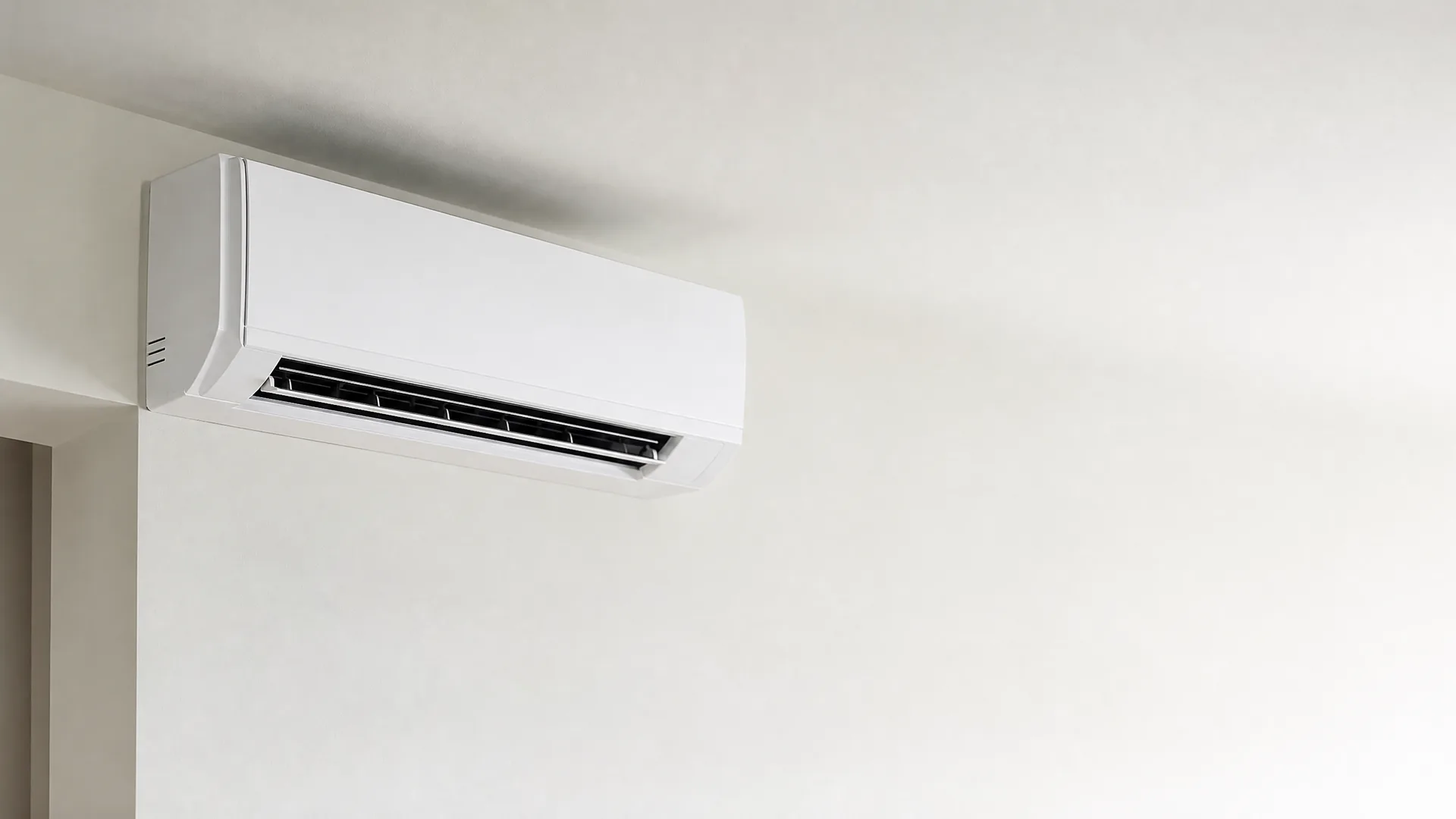
The indoor coil only grows mold or collects dust where air actually moves across it. In cooling mode, that coil runs cold and wet all summer, so anything growing there stays put, sealed under a layer of condensation. Switch to heat and the coil warms up fast. That heat drives off whatever settled into it, and the air handler blows it straight into the room. A few minutes later, once the coil's dry, the smell is usually gone.
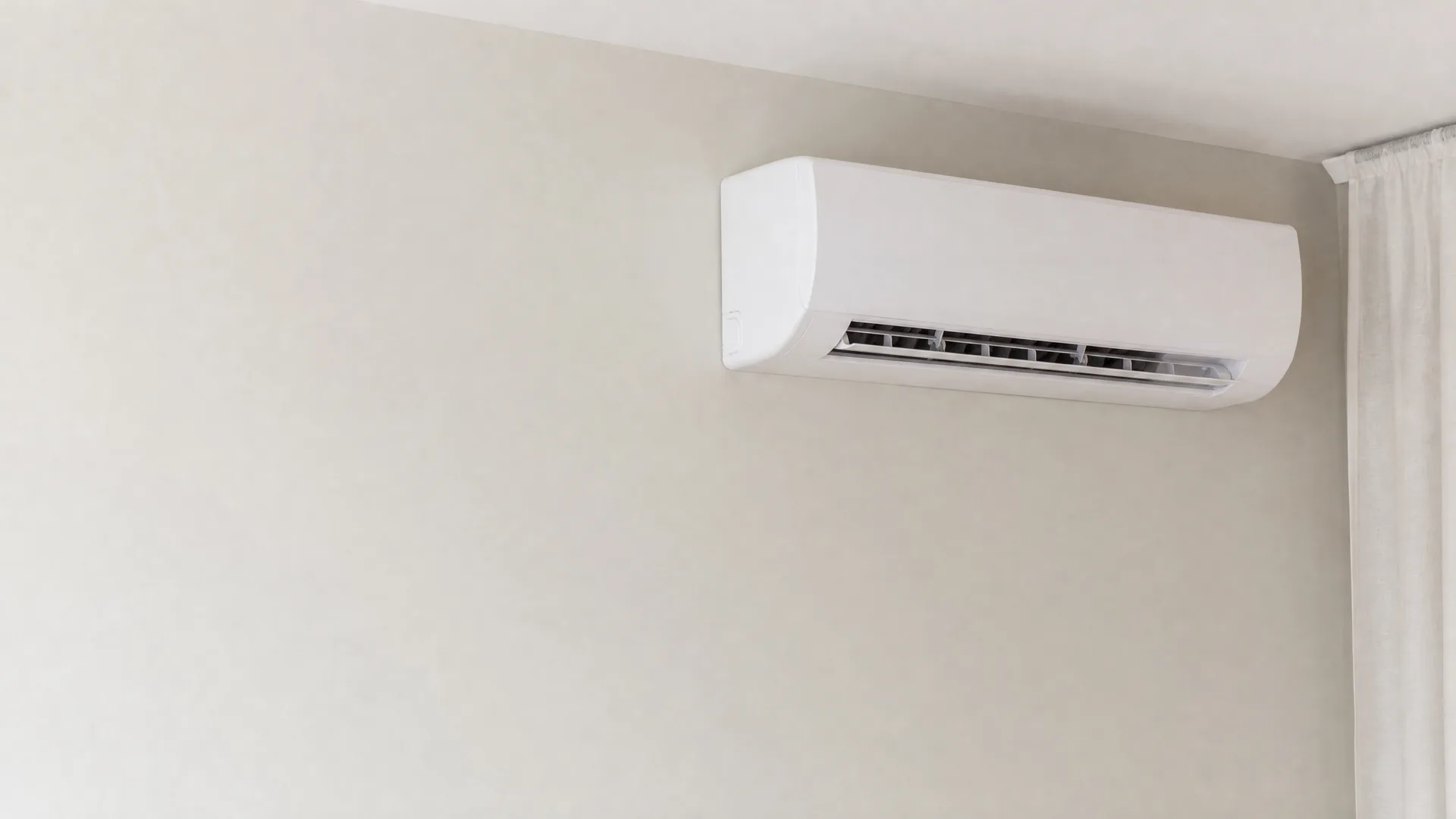
Dust that smells musty is one thing. A sharp, burning smell is another, and it points to the electrical side, not the coil. Mini splits run a circuit board and a fan motor inside that indoor unit, and dust sitting on either one can scorch slightly when the board powers up for heat mode. If you smell that, shut the unit off. It's worth having someone check it before you run it again, especially with Connecticut electric rates making every hour of runtime count.
A musty smell that fades after ten or fifteen minutes is the coil airing out, and it is not a reason to shut the system down. What's worth paying attention to is a smell that lingers through a full heating cycle, or one that changes character, a sour edge, a sharper chemical note, or anything like burning dust that doesn't clear. That kind of smell is the unit telling you something more than a damp coil is going on. Left alone, standing water in the drain pan can overflow onto the wall or floor below the indoor unit, and a coil that stays wet season after season breaks down faster than one that dries out properly. If the smell comes back every time you switch to heat, it's worth getting a look before it turns into a bigger repair.

You're at your desk on a July afternoon, the mini split blowing cold against the heat outside. Something catches your eye on the wall below the indoor unit, a dark wet streak running down toward the baseboard. You get up, press a finger to it, and feel the drywall giving just slightly. There's already a towel down from the last time this happened, soaked through again. You stand there for a second, thinking about how this same unit is going to switch over to heat in a few months, and whether whatever's causing this will still be in there. A local pro who services these year round would know in a few minutes whether it's the drain line or the pan.
The pro who reaches out is licensed in Connecticut.
There's no charge for the request.

When the coil and filter are clean, heat mode just runs warm air through the room. No smell catches you off guard, no haze on the vents. Air moving past the window behind it stays the only thing you notice.

Pull the front panel and dust sits thick across the filter, grime coats the casing. That's what's feeding the smell when heat kicks on. A contractor who services mini splits all year can tell you if a cleaning clears it or something else is going on.


The switch from cooling to heat changes which way refrigerant moves through the system. A part called the reversing valve makes that happen, and once it flips, the indoor coil goes from cold to hot in a matter of minutes. Whatever settled on the coil during the summer, dust, a film from the air, gets baked off fast, and that's the smell you notice right when heat mode starts. The blower wheel sits just behind that coil and pushes the air out to the room, so if it's carrying its own buildup, that gets added to what you're smelling. Water is the other piece. If the condensate pan under the coil held onto moisture from summer, that water warms up along with everything else and gives off its own smell. None of this involves anything burning in the sense of a fire risk. It's dust and moisture meeting heat for the first time in months. A smell that's sharp rather than musty, one that doesn't fade, points somewhere else, toward a part running hotter than it should.




Ignore the smell and let it ride out the winter, and most of the time the coil finishes shedding dust within a few heating cycles with no harm done to the system.
Keep ignoring it past that point and you're running a unit with a dirty coil all season, which makes the blower work harder to push air through and shows up on your power bill.
At 29.31 cents per kilowatt-hour, running your mini split on heat strip or auxiliary mode to mask a smell instead of fixing the coil costs real money. A clogged or moldy coil makes the system work harder to push out the same warmth, and that shows up on your bill before it shows up anywhere else.
EIA-861 2025 statewide residential average
Heat mode starts and the reversing valve flips the refrigerant flow direction.
The indoor coil switches from cold and wet to hot within seconds.
Trapped moisture or dust on the coil heats up fast.
Warm air crosses the coil and carries that smell into the room.

A burning smell for the first few minutes of heat mode is dust coming off the coil, and it clears on its own. A musty smell that doesn't fade after a full heating cycle means moisture is still sitting in that indoor unit, and it won't dry out on its own once the weather turns cold and damp.
If yours is still there after a few cycles, it's worth having someone look at the coil and the drain line before winter settles in. A local contractor who services mini splits all year in Connecticut has seen this exact pattern before, the coil that never fully dried after a humid summer, and knows where to check first. Getting matched with one means a single contractor familiar with this equipment reaches out to you directly, not a handful of companies competing for the job.

Only one pro gets your request, so you hear from one company.