

Call around yourself
You explain the dripping and the ice on the line to every company you call, compare quotes, and wait to see who actually shows up before the next freeze does more damage.
You turned the heat on and found water dripping from the indoor unit or pooling on the floor below it. It feels backward, since Connecticut winters run dry and cold, not humid, so a leak now is confusing in a way it wouldn't be in July. You caught it fast, before it ran onto a wall or a windowsill, and you want to know what's actually going on before it sits another day.
In winter, a mini split in heat mode still pulls some moisture out of the air across its coil, and that water has to run out through the condensate drain line. If that line is clogged with dust or algae, or if part of it runs through an unheated space and freezes, the water backs up into the unit instead of draining outside. A dirty air filter can make it worse by icing up the coil itself, which then drips as it thaws between heating cycles. Either way, the water you're seeing is draining where it shouldn't, not forming out of nowhere. Left alone, it can stain the wall below the unit or reach wiring inside it, so it's worth having someone trace the line and clear it before the next cold stretch.
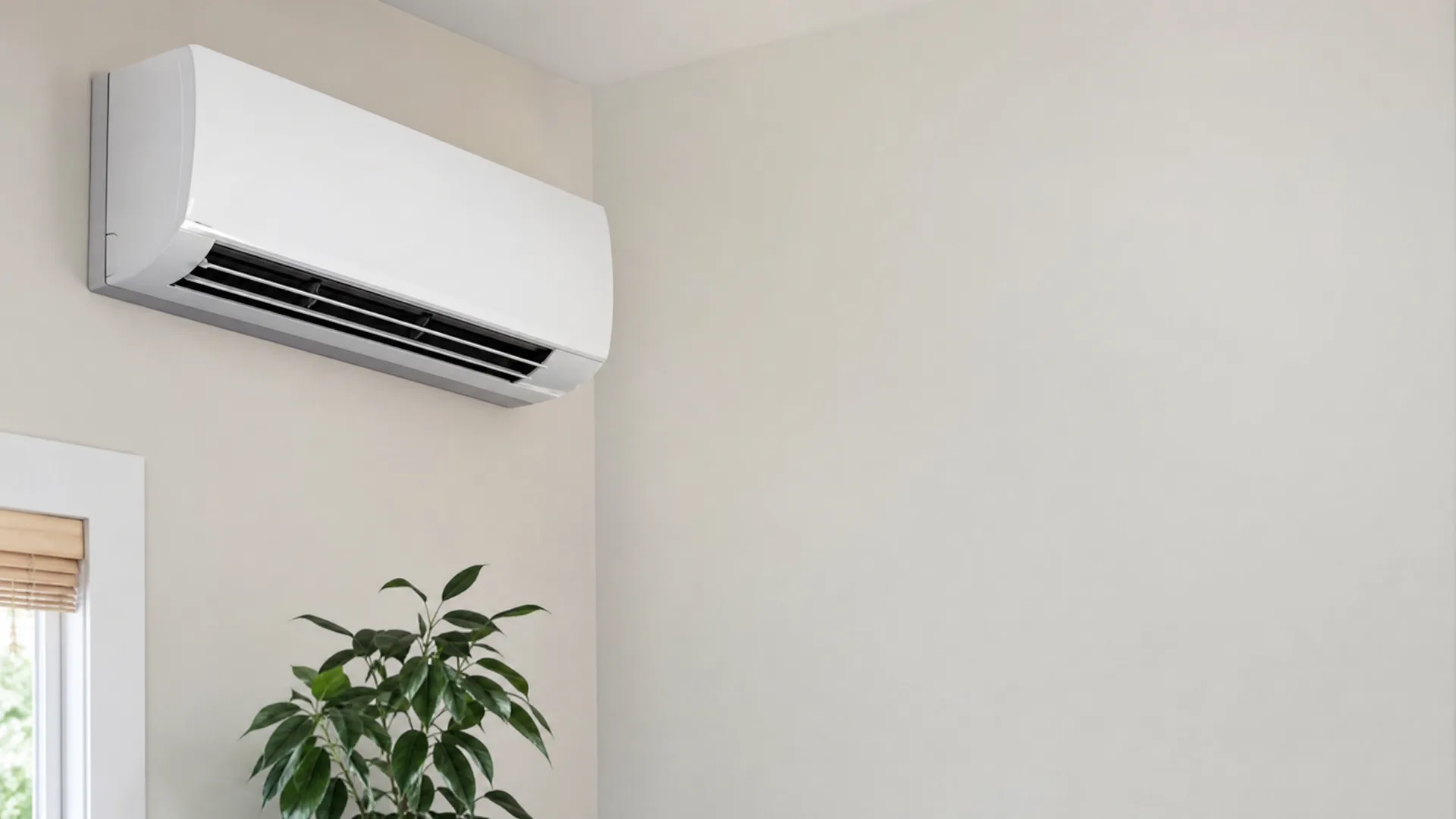
Your mini split pulls moisture out of the air even in winter, and that water has to go somewhere. It runs down a condensate line to the outside, usually through a small hole drilled in your wall. When nighttime temperatures drop into the teens or lower, as they do across Connecticut from December through February, the end of that line can freeze shut. Water backs up behind the ice with nowhere to go, so it rises back into the indoor unit and drips out the front instead.
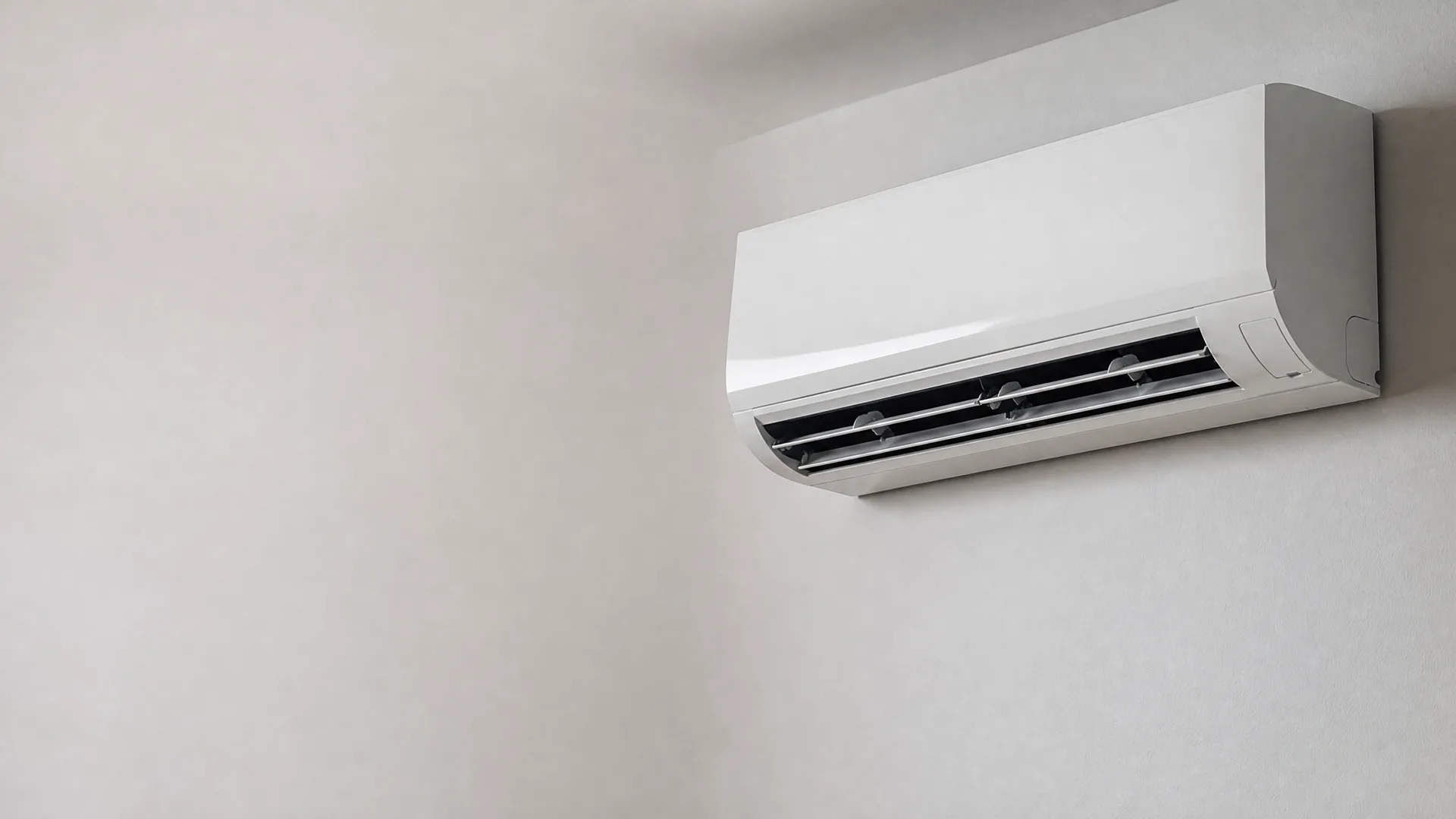
The indoor coil needs steady airflow to stay above freezing while it works. A filter clogged with a winter's worth of dust slows that airflow down, and the coil gets colder than it should. Once part of the coil drops below 32 degrees, moisture on its surface turns to ice instead of draining away. When the unit cycles off and that ice melts, it melts faster than the drain pan can clear it, and the extra water finds its way out onto your floor or windowsill.

Wait, the image is a summer afternoon, not winter. Let me write to what the image actually shows.
You're in the home office on a July afternoon, the kind that turns the room sticky by two o'clock. You glance up from your desk and catch it: a dark streak running down the wall under the indoor unit, already a foot long. By the time you get up, it's dripping onto the baseboard. You grab a towel from the hall closet and lay it under the unit, pressing the wet patch on the wall with another. The mini split is still blowing cold air, working fine as far as you can tell, except for the water finding its way out where it shouldn't.






Fill out one short form instead of calling around.
It costs nothing to send, and you don't have to hire anyone.
A clogged drain line backs water up slowly, over days, as algae and dust narrow the passage until the pan overflows. You might catch it early: a damp spot, a slow drip, nothing dramatic yet.
A frozen drain line stops water all at once. The night it freezes solid, the pan fills and spills, and you find the puddle the next morning already there, not building.


You explain the dripping and the ice on the line to every company you call, compare quotes, and wait to see who actually shows up before the next freeze does more damage.
You answer a few questions once, and a contractor who handles mini splits in Connecticut winters reaches out to you directly.
Look at where the water is actually landing. A stain spreading across the ceiling or wall below the indoor unit means it's been dripping for a while, not just today. Water pooling on the windowsill or floor under the unit, or running down the wall itself, points to the pan overflowing inside. Check the line set on the outside wall too. If there's a knob of ice around it, that's the drain backing up behind a freeze. Left alone, the water finds its way into drywall and trim, and once that happens you're dealing with more than a mini split problem.

That dew point sits around 61°F across a Connecticut summer, averaged over where homes in the state actually are. That's the kind of air your mini split spends all summer pulling moisture out of, and it runs a lot of condensate down that drain line to keep up. Come winter, the line that carried all that water for months is the same one that freezes when the temperature drops and backs up into the unit. The leak you're seeing now traces back to a line that worked hard all summer.
NASA POWER T2MDEW county cells weighted by homes

A mini split that leaks in a Connecticut winter is almost always dealing with a frozen or clogged drain line, not some new mystery problem. The cold snap exposed what the summer left behind, or it froze a line that had nowhere else for the water to go. Either way, the water on your floor or the ice on the line outside is telling you something specific, and now you know what to look for.
You don't have to figure out which one it is on your own, or spend an evening calling around to find someone who'll come out before the next freeze. Answer a few questions about what you're seeing and you'll be matched with a contractor who handles mini splits in Connecticut winters, and they'll reach out to you directly. No explaining the drip three different times to three different companies, no sitting with quotes trying to guess who's reliable. Just a straight path to someone who already knows what a frozen line in January looks like.


Skip searching for a mini split pro and answer a few questions instead.
There's no charge for the request.