Running clean
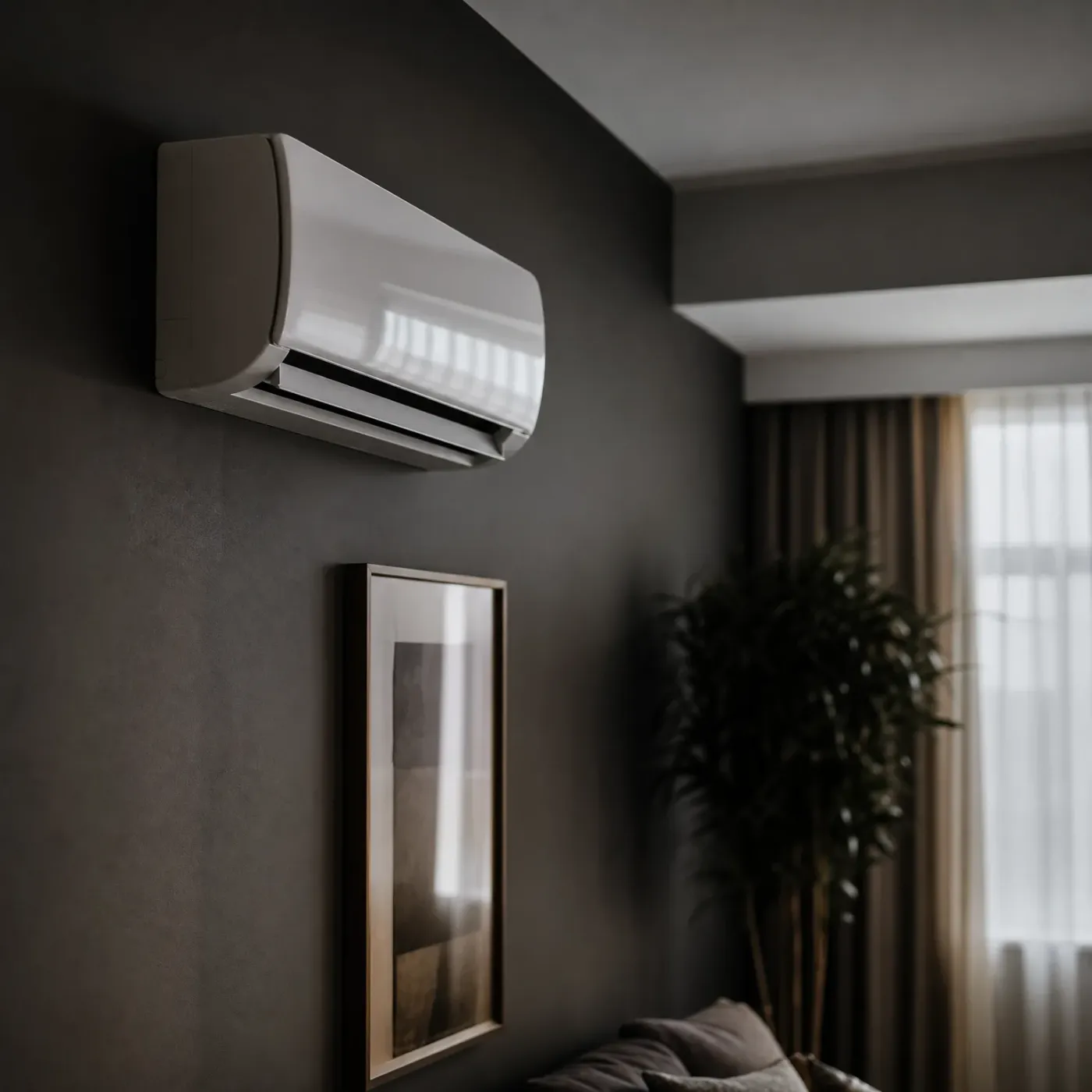
A mini split that's keeping up looks like this: the vents stay clear and the coil behind them can actually pass air. It pulls the heat and moisture out of the room and sends out air at the temperature you set it to.
Hand off the mini split problem
A mini split blowing cold air when it should be heating, or not cooling right in the middle of a humid Connecticut summer, usually points to one of a few things: a refrigerant leak, a dirty coil, or a control board issue. This page gets into what causes it and what to check first. When you're ready for someone to look at it, fill out the form and let a local contractor take it from here.
Send it todayA mini split set to heat but blowing cold air is usually low on refrigerant, or the outdoor unit is frozen over. Refrigerant doesn't get used up, so if the charge is low, something is leaking, and the system will keep losing its heating power until that leak gets found and fixed. If the outdoor unit is iced up, the system may switch into defrost and blow cool air for a few minutes at a time, which is normal in cold weather, but if it never clears or happens too often, the defrost cycle itself may be failing. On the cooling side, a unit blowing air that isn't cold points to the same leak, or a coil so dirty it can't pull heat out of the air anymore. Either way, the mini split is telling you something specific is wrong, not just that it's getting old. Left alone, it runs longer to do less, and on a humid Connecticut summer day that shows up fast on your power bill.



You're at the desk working through the afternoon, and you notice the carpet under the window feels damp. You look up and there's a dark streak running down the wall below the indoor unit, soaking into the paint. You grab a towel from the hall and lay it down, then stand back and watch the unit for a minute. It's still blowing air, but it doesn't feel right against your hand, not cold the way it should on a sticky July day, not anything really. Outside the heat presses against the windows. You leave the towel where it is and go find the model number on the indoor unit, because someone's going to ask for it.




You know your mini split is set to heat, but cold air is coming out of the vents anyway. It makes you wonder if the thermostat is confused, or if something inside the unit is switching the wrong way. Understanding how the system is supposed to change over from cold to warm air helps you tell whether what's happening is normal startup behavior or an actual problem with the unit.
A mini split switches between heat and cold air using a reversing valve, which changes the direction refrigerant flows through the system. When you set it to heat, that valve shifts so the outdoor unit absorbs heat from the outside air and the indoor coil releases it into the room. Right after that switch, the indoor coil is still cold from whatever it was doing before, so a short burst of cool air is normal while it warms up. If cold air keeps blowing well past that point, the valve may be stuck in the wrong position, or the system doesn't have enough refrigerant to build heat at the indoor coil.

A summer dew point averaging 61°F across Connecticut means the air coming into your mini split is carrying a lot of moisture, not just heat. Source: NOAA climate data. The indoor coil has to pull that moisture out before the room feels comfortable, and a coil already coated in dirt or mold can't do that well. You'll feel it as a room that stays clammy even with the unit running, or cold air that still feels sticky instead of dry. When the coil can't keep up, the system works harder and sometimes starts short cycling, which is often what pushes it toward blowing cold air when it shouldn't.
NASA POWER T2MDEW county cells weighted by homes



Only one pro gets your request, so you hear from one company.
Send the request today and stop worrying about who to call.
No charge to send it. You decide if you hire them.
You might be standing under the indoor unit with your hand out, feeling cold air when the display says it's heating. Or the room just won't drop in temperature on a sticky afternoon, so the unit runs and runs while the air feels thick. Maybe you've noticed the outdoor unit caked in ice, or heard it cycling on and off more than it used to. Some homeowners catch a musty smell near the vents before anything else changes. On its own, a few cold minutes at startup is normal. Cold air that stays, ice that doesn't melt, or a unit that won't stop running is the system telling you it can't keep up, and your electric bill will show it before the season's over.

A mini split that's keeping up looks like this: the vents stay clear and the coil behind them can actually pass air. It pulls the heat and moisture out of the room and sends out air at the temperature you set it to.

This unit hasn't been opened up in a long time. Dust and grime across the top panel and vents block airflow over the coil, and a coil that can't breathe can't hold its heat. That's a common reason a unit set to warm ends up blowing cold.
At 29.31 cents a kilowatt-hour, a mini split that's lost its charge or iced over isn't just blowing the wrong air, it's running longer to chase a temperature it can't reach. That extra runtime shows up on your bill before the unit ever gets fixed.
EIA-861 2025 statewide residential average


Cold air on heat mode comes down to two things: a refrigerant leak or a frozen outdoor coil. One of those is happening in your system right now, and both get harder to fix the longer the unit keeps running on a bad charge or an iced-over coil. That's the whole answer. Everything else, the dirty filter, the control board, the thermostat setting, is worth ruling out, but the pattern points at the refrigerant side first.
You don't need to figure out which of the two it is before you ask for help. That's the part a contractor sorts out by looking at the unit, not something you diagnose from the couch. What matters is getting someone out who actually knows mini splits, because these systems get worked on differently than a central AC, and a contractor who services them through a Connecticut summer has seen this exact complaint plenty of times. They know what a unit losing charge looks like versus one that's just iced over from bad airflow, and they know it by the time they're done looking at the outdoor unit.
When you send the request, it goes to one contractor, local to you, licensed to do the work. Not a list of five companies calling you back at dinner to pitch the same job. Just the person who's going to look at your system. From there, the part that's been sitting on your plate, finding someone who knows this equipment, isn't your job anymore.

Let someone else find the pro



