Should a mini split run all winter in Connecticut

Step 1 of 3: Equipment

Yes, a mini split can run all winter in Connecticut, and most are built to. Modern cold climate heat pumps keep producing heat well below freezing, some down to 5 degrees or lower, so the drop in outdoor temperature alone doesn't shut them down. What changes is how hard the unit has to work and how often it defrosts. Below about 20 to 30 degrees, you'll notice the outdoor unit cycling into defrost mode more often, melting off frost that builds on the coil, which can make it seem like it's struggling when it's actually doing what it's supposed to do. If yours is an older or non cold climate model, it may lean on backup electric heat strips once temperatures fall hard, and that changes what you see on your power bill. Either way, running it through a Connecticut winter is normal use, not a stretch of what it was built for.

A white wall-mounted mini-split air conditioner installed high on a beige interior wall below crown molding, with a window and light curtain on a black rod at right.

Running clean through winter

A mini split that's been serviced before the cold sets in can keep pulling heat out of a Connecticut winter without trouble. The coil stays clear, the filter breathes, and the unit cycles the way it was designed to down near freezing and below.

A wall-mounted mini-split air conditioner indoor unit with a dusty off-white casing and dark lower vent, installed high on a plain light-colored wall below a ceiling molding.

Running dirty through winter

Dust on the casing like this usually means dust and grime on the coil behind it too. A coil that's caked restricts airflow, so the unit works harder to hold the same temperature, and in a cold snap it may not keep up at all.

Is your mini split working harder than it should this winter

Listen for the outdoor unit running longer than it used to, or cycling on and off more than it should on a cold night. Check the indoor head for weak airflow, or air that feels cooler than the setting calls for. Look at the outdoor coil. Frost is normal in defrost cycles, but a thick layer of ice that doesn't clear on its own is not. A dirty filter or a coil caked with dust makes the system pull more power to do the same job, and that shows up on the electric bill before it shows up anywhere else. Left alone through a full Connecticut winter, a strained unit can ice up for good or stop keeping the room warm when you need it most.

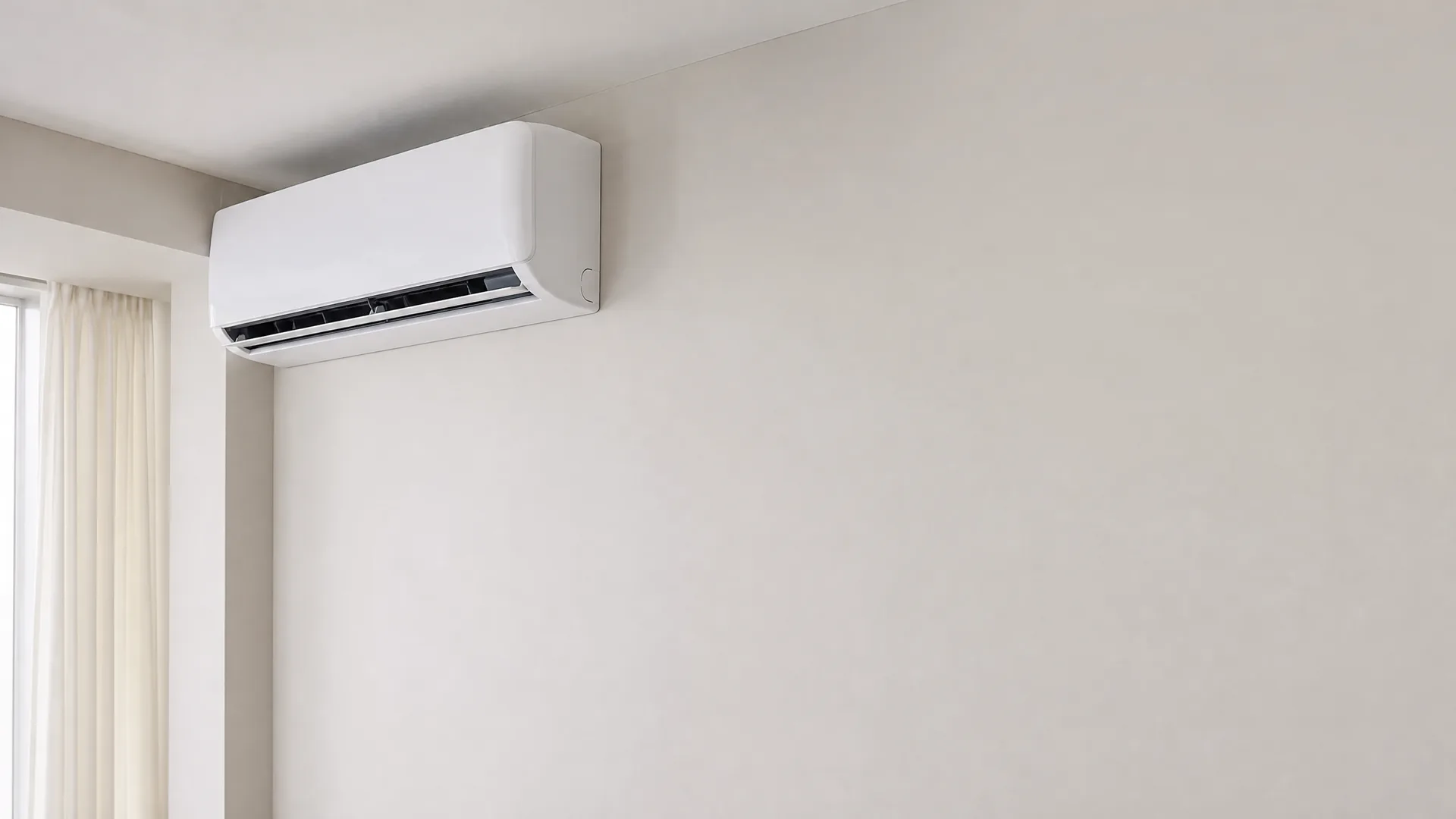
A white wall-mounted mini-split air conditioner near the ceiling of a room with plain beige walls and a pale curtain at the left edge.

What frost on the coil means

A mini split pulls heat from outdoor air that's well below freezing, so some frost on the outdoor coil in January is normal. The unit runs a defrost cycle to clear it, reversing briefly before going back to heating. If frost builds up faster than the unit can clear it, the coil stays coated, airflow drops, and the system has to work harder to move the same heat into your house.

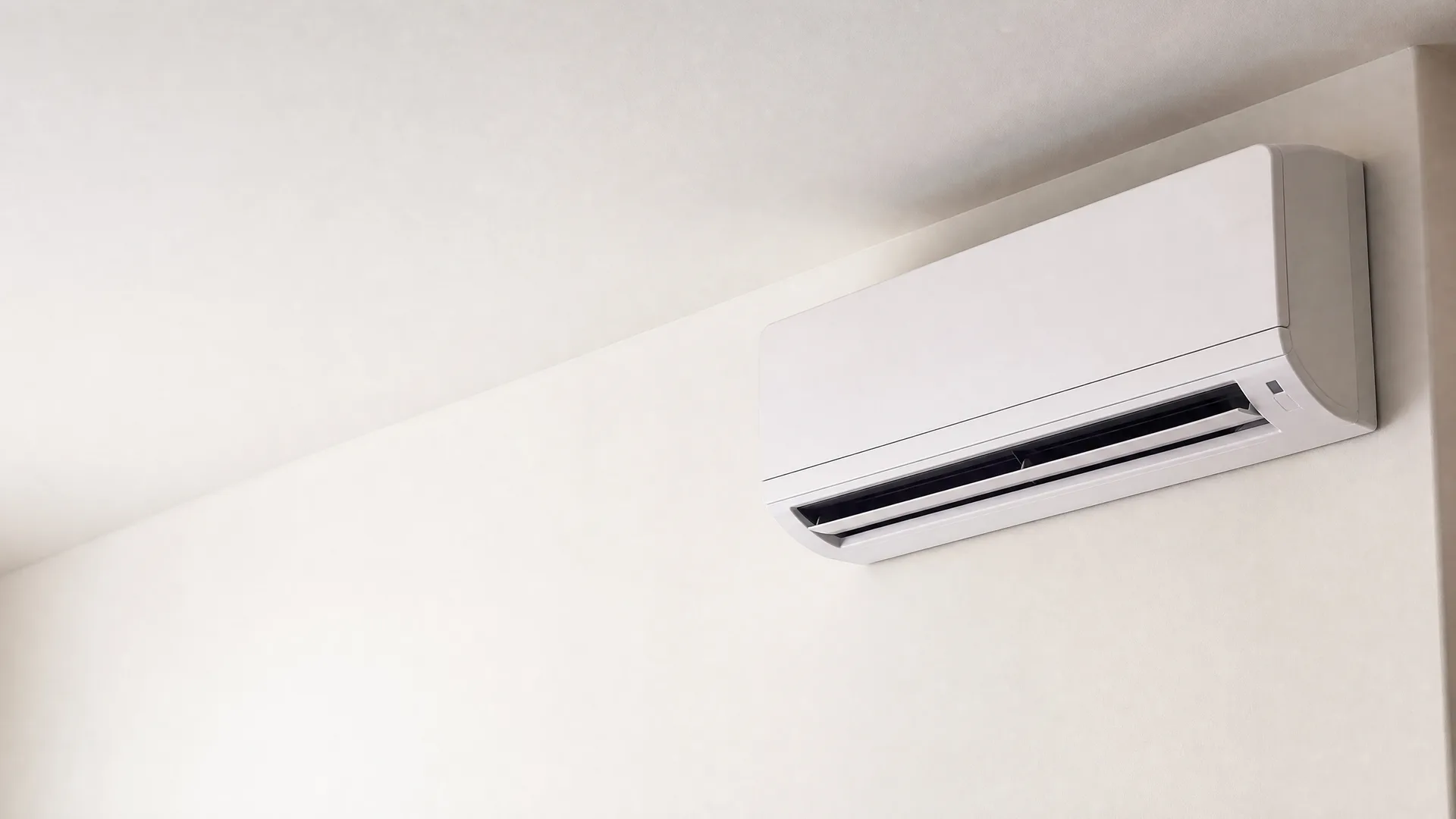
A white wall-mounted mini-split air conditioner indoor unit installed near the ceiling on a plain off-white interior wall.

Why the filter matters more in winter

The indoor filter screens the air before it crosses the coil that's doing the work of heating your rooms. A filter clogged with dust and pet hair chokes that airflow, and the coil behind it has to run longer to push out the same warm air. In a Connecticut winter, with the system running for months straight, a dirty filter adds up fast on a power bill that's already among the highest in the country.

How does a mini split actually make heat when it's freezing outside?

It sounds backward. The outdoor unit is sitting in Connecticut air that might be 20 degrees, and somehow that's where the heat is supposed to come from. People picture a furnace with a flame and assume a mini split must work some other way when it's heating instead of cooling, but it's the same system, just running in reverse.

It pulls heat out of the cold outdoor air and moves it inside

Even cold air holds some heat, and refrigerant inside the outdoor unit is colder still, so it absorbs that heat as it passes through the coil. A compressor squeezes the refrigerant, which raises its temperature further, then sends it to the indoor head where it gives off that heat into your room. The refrigerant cools back down and heads outside to do it again. Nothing is burned and nothing runs backward. It's the same cycle a refrigerator uses, just aimed the other direction. That's why outdoor temperature alone doesn't stop it from working. A unit rated for cold climates is built to keep pulling heat out of air that's well below freezing.

A gray-haired man with a beard in a blue button-placket shirt reclines on a couch with his eyes closed, beside a sunlit window with a green plant.
A woman in a cream knit sweater sits in an armchair with her eyes closed near a window showing yellow autumn foliage, with a mug on a round wooden side table beside her.
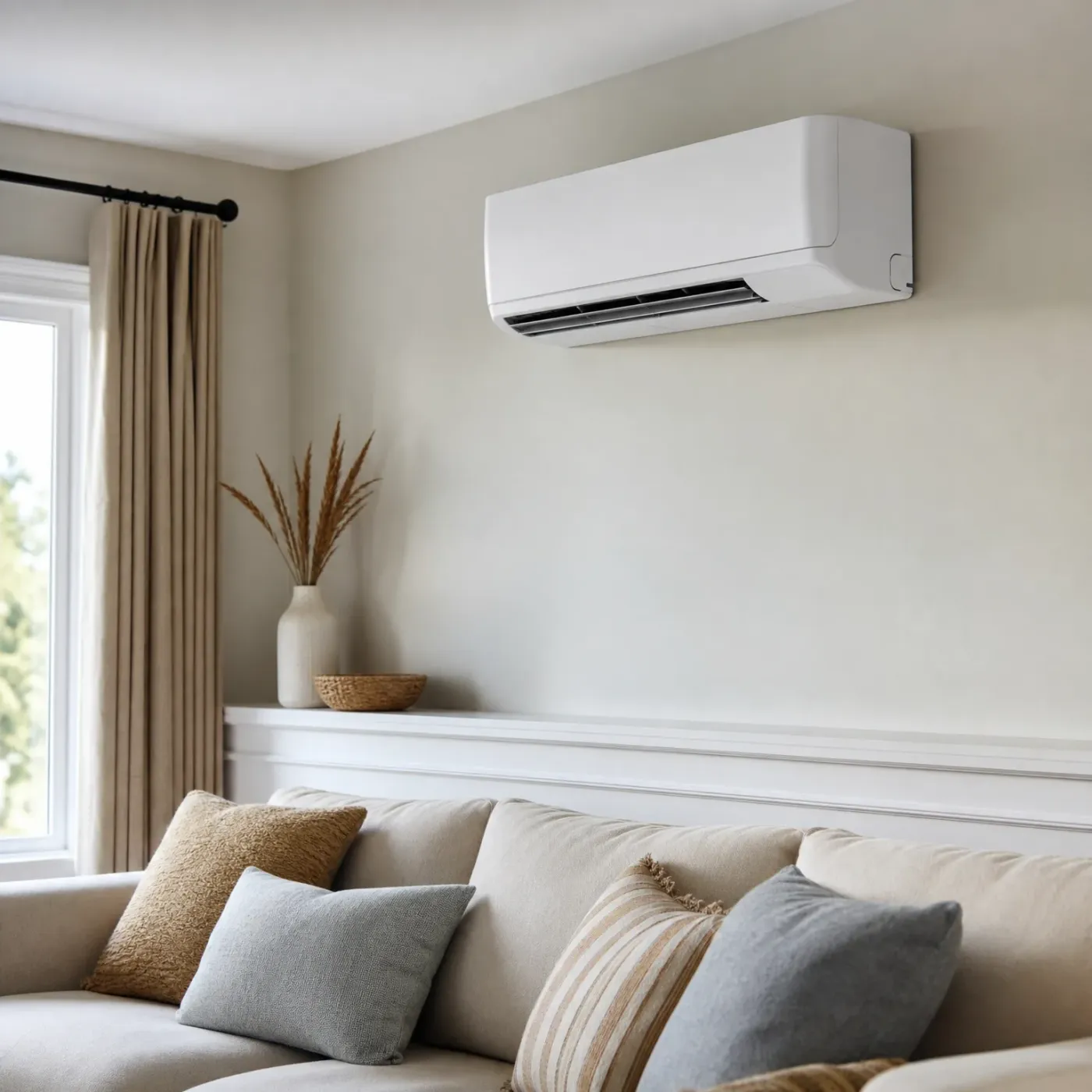
A white wall-mounted mini-split air conditioner on a pale wall above a beige sofa with assorted cushions, beside a window with long curtains and a shelf holding a vase of dried grasses and a woven bowl.

It's off your list after this

Your request stays with one local pro.

Send the form, and lining up the mini split tune-up stops being yours to chase.

Hand it over

Sending the form costs nothing.

Serviced vs. Running on Its Own

Serviced before winter

  • A tech cleans the outdoor coil before the cold hits, so it doesn't start the season already fighting dirt that blocks airflow.
  • The filter gets washed or replaced, so the indoor head isn't pulling warm air through a layer of dust and pet hair.
  • With the refrigerant charge checked, the system doesn't have to run longer cycles to make up for a low charge.
  • A clear path around the outdoor unit means snow and ice don't choke it off on the coldest nights.
  • Electric resistance backup, if the unit has it, stays a backup instead of doing work the heat pump should be doing.

Running without service

  • A coil caked with a summer's worth of dust and grime can't pull heat from the air as well, so the compressor runs longer to make up for it.
  • A clogged filter cuts airflow across the indoor head, and the room takes longer to reach the temperature you set.
  • If the refrigerant charge has dropped, the unit works harder for less heat, and the outdoor fan may run close to constant.
  • Leaves, snow piled against the outdoor unit, or a cracked line set can all force the system to strain through a cold month.
  • A minor fault that would've shown up in a fall checkup can turn into a breakdown on the night you need heat most.
A dusty, stained wall-mounted mini-split air conditioner indoor unit near the ceiling on a plain beige wall, with visible lint buildup at its intake grille.
Before you get your mini split maintenance
A white wall-mounted mini-split air conditioner installed high on a beige interior wall near the ceiling, with a white-framed window at the left edge.
After you get your mini split maintenance

Power costs 29.31 cents per kilowatt-hour statewide

At 29.31 cents per kilowatt-hour, every bit of heat your mini split struggles to produce costs more here than almost anywhere else. A dirty coil or clogged filter makes the unit run longer to hit the same temperature, and that extra runtime shows up on your bill all winter long.

EIA-861 2025 statewide residential average

Winter running, settled

  • A mini split is built to run all winter in Connecticut, down well below freezing.
  • Cold alone doesn't stop it; a dirty coil or clogged filter is what makes it struggle.
  • A unit serviced before the cold sets in cycles the way it was designed to.
  • Frost on the outdoor coil in January is normal and clears on its own during defrost.
  • Longer run times or weak airflow from the indoor head are signs worth checking, not signs to ignore.
  • At over 29 cents per kilowatt-hour, a struggling unit costs more here than in most of the country.

A mini split is built for this. Connecticut winters don't ask more of it than it's designed to handle, and the cold by itself isn't what causes trouble. What causes trouble is a coil that's gone a year without cleaning, or a filter so clogged the indoor head can't move air through it. Those are the things that make a unit run longer than it should to hit the same temperature on the thermostat. Frost on the outdoor coil some mornings in January is just the unit doing its job, pulling heat out of cold air, and the defrost cycle handles it without you doing anything. What's worth paying attention to is the unit running longer than it used to, cycling more than it should, or the indoor head putting out air that feels weaker or cooler than the number on the display. Those are signs the system is working harder than it needs to, and in a state where power costs over 29 cents a kilowatt-hour, that extra work doesn't stay invisible. It shows up on the bill. A unit that's been serviced before the cold sets in, coil clean, filter clear, doesn't have that fight. It cycles the way it was built to, pulls heat the way it was built to, and gets through a Connecticut winter without costing you more than it should.

A man in a gray sweater reclines in a brown leather armchair with his eyes closed, beside a wooden side table holding a mug, a folded newspaper and a potted plant, with a bookshelf and sunlit window behind him.
A man with greying hair and a dark sweater leans back on an armchair with his eyes closed and a slight smile, in a living room with a bookshelf, plant, folded newspaper and mug on a wooden table.
A man in a gray fleece jacket sits reclined in a leather chair with his eyes closed, in a room with bookshelves, a table lamp, a window, and a desk holding a folded newspaper and a dark mug.
A bearded man in a gray fleece pullover sits with eyes closed in a brown leather armchair in a living room, with a floor lamp, bookshelf, potted plants, a side table holding newspapers and a dark mug, and a bright window behind him.

Stop chasing a mini split pro

A mini split that's clean going into winter will keep making heat down near freezing without a fight. The problems people blame on cold are usually a dirty coil or a clogged filter making the unit run longer than it should, and at 29.31 cents per kilowatt-hour that extra runtime costs you. A local contractor who services this equipment every season knows what usually goes wrong first. Send the request and let them take it from here.

Reach a local pro

A licensed local pro takes the request for your mini split tune-up.

You're not committing to anything by asking.