




Can a mini split heat a basement in a Connecticut winter

Describe your mini split job, and a local pro who handles it gets in touch.

Get matched

Can a mini split actually heat a basement in a Connecticut winter?

A finished basement with a mini split can still feel like a gamble once January sets in. You've seen what the unit does for the rest of the house, but a basement sits below grade, often with less insulation and colder walls around it, and you want to know if the same system will actually keep that space livable when it's 20 degrees outside.

Yes, if it's sized and installed for that space

A cold climate mini split is built to keep producing heat well below freezing, down to temperatures colder than Connecticut usually sees. The basement part comes down to sizing and placement, not the cold outside. A basement loses heat differently than an upstairs room, through the foundation walls and slab, so a unit sized off square footage alone can fall short on the coldest nights. One sized for the basement's actual heat loss, with the indoor head placed where it can move air through the space, will hold its temperature through a Connecticut winter. The equipment is capable. Whether it works in your basement depends on that unit matching that room.

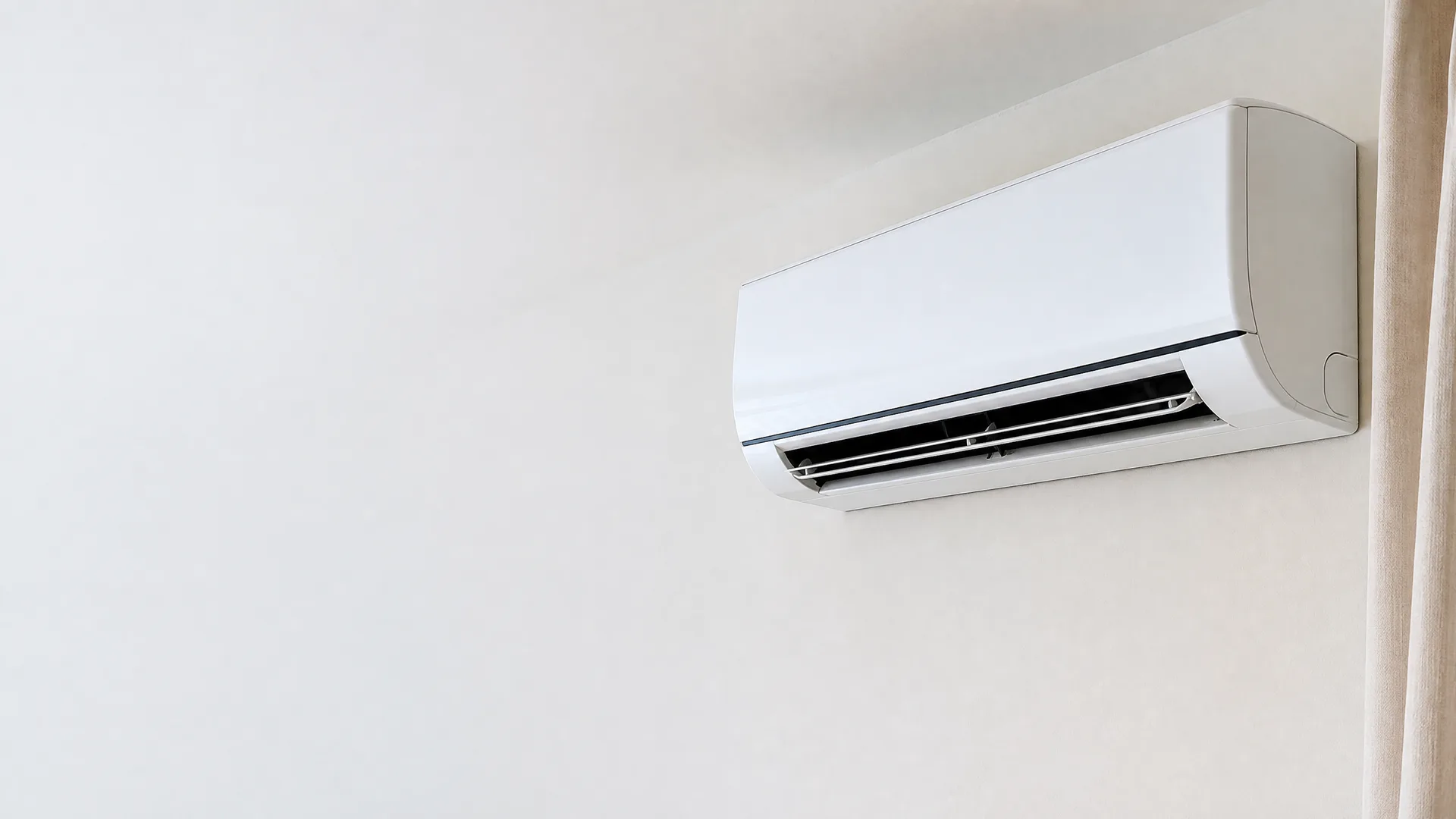
A white wall-mounted mini-split air conditioner unit installed high on a plain beige wall near the ceiling, with empty wall space to the right.

Sizing matters more below grade

A basement loses less heat through its walls than a room upstairs, since the ground around it stays warmer than the winter air. But it also starts colder and gets less help from the sun. A contractor sizing a mini split for that space has to weigh both, not just measure square footage the way they might for a bedroom. Oversize it and the unit short cycles. Undersize it and it runs flat out on the coldest nights in January and still falls short.

A white wall-mounted mini-split air conditioner indoor unit on a plain light-colored wall, with a beige curtain at the right edge of the frame.

Cold climate models keep working

Standard mini splits lose output as the outdoor temperature drops, and some stop heating well below freezing. Cold climate models are built to keep producing heat down to zero degrees or lower, which matters on the nights Connecticut sees single digits. That's the spec worth checking before anything goes in a basement, because a unit that can't hold up outside won't hold up underground either once the thermostat gets ambitious.

One Zone or Several for the Basement

Single-zone to the basement

  • One indoor head covers the basement alone, so it can run flat out on the coldest nights without competing for capacity with upstairs rooms.
  • A contractor can pick a unit sized specifically for the basement's square footage and its exposure, rather than splitting output across a home.
  • If the compressor outside ever needs service, only the basement loses heat while the rest of the house keeps running on its own system.
  • Install is simpler: one line set, one indoor head, one spot on the wall outside for the outdoor unit.
  • It won't help if the basement has more than one room or an open stairwell pulling warm air up to the main floor.

Multi-zone with upstairs rooms

  • One outdoor compressor feeds the basement and other rooms, each with its own head and its own thermostat setting.
  • You can turn the basement zone down on nights nobody's down there and let the upstairs zones carry the load instead.
  • A multi-zone system costs more upfront to install than a single basement head because of the added line sets and heads.
  • If the outdoor compressor needs repair, every zone on it loses heat at once, not just the basement.
  • Balancing a basement zone against upstairs zones takes more careful sizing, since one compressor has to meet very different heat losses at the same time.
Single-story house with gray horizontal lap siding, dark shingled gable roof, a small covered front porch with a dark door, and windows, set behind a patchy green and brown lawn under a clear blue sky.

That basement question is really a summer question too. Connecticut's summer dew point averages 61°F, per NOAA climate data, which sits right in the muggy range. A basement holds onto that humidity longer than the rooms above it, since the air down there moves less and the concrete stays cool and damp. A mini split head down there has to pull that moisture out of the air before the space feels dry, not just cool. If the unit is sized only for summer cooling load and not for how long it needs to run to wring out that dampness, you'll notice it: a basement that reads cool on the thermostat but still feels clammy. Getting that balance right for both seasons is a sizing question worth handing to a contractor who can look at your specific basement.

NASA POWER T2MDEW county cells weighted by homes

A local pro for your mini split installation

Answer a few questions instead of calling shop after shop.

Sending the form costs nothing.

What you'd notice some mornings

A mini split that's sized right keeps a basement around the same temperature you set, even when it's in the teens outside. One that's sized wrong falls behind on the coldest stretches. You'd feel it as a basement that's fine most days but cold by the stairs on the nights you need it most, with the head running constantly and never quite catching up. That gap between most days and the worst nights is what a Connecticut winter actually tests. It's also the part a brochure spec sheet won't tell you, because it depends on how the room holds heat, not just how many BTUs the unit is rated for.


What a bad fit costs you

An undersized unit in a basement runs near full output for hours trying to reach a setpoint it can't hold, and in a state where power costs more than most places, that shows up on the bill before it shows up as a comfort problem. Oversized has its own cost: short cycling, where the unit satisfies the thermostat fast and shuts off before it's dehumidified the space, leaving the basement cold and damp at once. Either way you're paying for capacity that doesn't match the room. Getting the sizing right the first time is the difference between a basement that costs what you expected and one that doesn't.

A smiling woman with dark shoulder-length hair in a cream V-neck sweater sits at a marble counter with a glass of red wine, with a kitchen and softly lit living room behind her.
A woman in a dark green sweater laughs while seated at a marble kitchen island with a glass of red wine, with open shelving, cabinets and a living room visible behind her.
A woman with long dark hair in a cream knit sweater laughs while looking off to the side, seated at a counter with a glass of red wine, in a dimly lit living room with a sofa, lamp, framed pictures and houseplant behind her.
A smiling woman with long dark hair in a beige sweater sits at a marble kitchen counter with a glass of red wine, with a dimly lit living room behind her.

Sizing and installation decide the outcome

  • A mini split can heat a Connecticut basement through winter if it's sized for that space and installed with low temperature performance in mind.
  • Cold climate heat pump models keep producing heat well below freezing, which matters on the nights Connecticut drops into the teens.
  • A single-zone unit dedicated to the basement avoids the capacity competition that comes with a basement sharing a system with upstairs rooms.
  • Correct sizing also pays off in summer, since an oversized or undersized unit struggles to pull the basement's humidity down.
  • Below grade heat loss is different from a room upstairs, so a load calculation for the basement itself is what gets the sizing right.
  • The gap between a basement that holds its temperature and one that falls behind in January usually traces back to how the unit was sized and installed.

A mini split can keep a Connecticut basement warm all winter, but whether it does comes down to two things: how it was sized and how it was installed. The basement itself loses heat differently than the rooms above it. The ground around the foundation holds warmth longer than the winter air does, which helps, but the space also starts colder and gets no sun through the walls. A contractor who runs a load calculation on the basement itself, rather than guessing from its square footage, is the one who gets the sizing right. That matters most on the nights the temperature drops into the teens, when an undersized unit or a model not built for cold climate performance starts to fall behind. A single-zone system dedicated to the basement helps here too, since it isn't splitting capacity with the upstairs on the coldest stretches of January. The same sizing work carries into summer. A unit that's too big or too small for the space has a harder time pulling the humidity down once the air outside turns muggy. None of this is really about the equipment brand or how much you spend. It's about whether the unit matches the basement it's heating and cooling, and whether the installation accounted for what makes a below grade room different from the rest of the house. Get that right and the basement holds its temperature. Get it wrong and you feel the difference by February.

A smiling bearded man in a navy sweater sits at a candlelit dinner table with a glass of red wine, a bowl of salad, and plates of food in the foreground.
A woman with dark hair in a bun reclines on a sofa with her eyes closed, wrapped in a cream fleece blanket, a closed blue hardcover book resting in front of her, with a lit lamp and a vase of dried flowers in the background.

Mini Split Installation

Get the right pro for your mini split

Describe your mini split job once, to one pro.

A black-framed smartphone standing upright against a plain white background, its screen filled with solid green.
Step 1 of 3: Equipment




